Basic Method
The easiest way to discover a number is when there is only one number left to put in a row, column or quadrant. In this case the missing number goes in the only empty cell left.
When to use it
Use after scanning, whenever a cell or a unit has only one option left.
Worked example
-
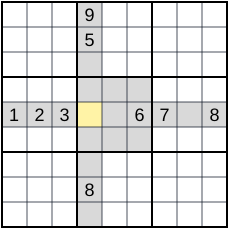
A naked single: this cell's row, column and box already contain eight different digits.
-
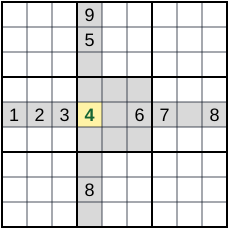
Only the digit 4 is missing, so it is forced into the cell.
-
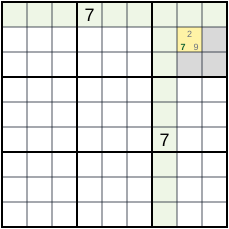
A hidden single: 7 is blocked from every other cell of the box, so it belongs here even though the cell still shows other candidates.
In practice
As you can see, all numbers except 7 are placed in the first row, so only this number can go in the empty cell. Something similar happens in the first column with 5, as well as in the sixth quadrant with 1.
Common mistakes
- Spotting a naked single but forgetting to remove that digit from the cell's peers.
- Overlooking hidden singles because the cell still shows several candidates.
Frequently asked questions
What is the difference between a naked and a hidden single?
A naked single is the last candidate in a cell; a hidden single is the last cell for a candidate in a unit. Both force a placement.